
Data Center Rack Manufacturer Hickory NC | Custom Racks, Shelves, Enclosures | Farris Group
What makes a rack “deployment-ready” instead of “shop-finished”?
Deployment-ready racks arrive predictable. Dimensions match the install plan. Interfaces match the accessory plan. Panels and doors seat cleanly. Shelves behave consistently. Cooling perforation features align to airflow intent. Packaging protects the finish so the rack looks the same on the dock as it did at final inspection.
That readiness matters because data centers deploy in phases. A rack family that remains stable across releases keeps commissioning clean and keeps later expansions aligned with earlier work.
How do perforation features support cooling and service access?
Perforation is not decoration. It supports airflow behavior through doors, panels, side features, and shelf surfaces. A consistent perforation strategy can help maintain predictable cooling behavior and can reduce the need for field modifications. It also helps when rack families include both closed and open configurations, because airflow behavior changes with enclosure choices.
A perforation plan also intersects with strength. The rack still needs stiffness and stable interfaces. That balance is a core part of data center rack fabrication.
How do welded, riveted, and bolted builds serve different deployment strategies?
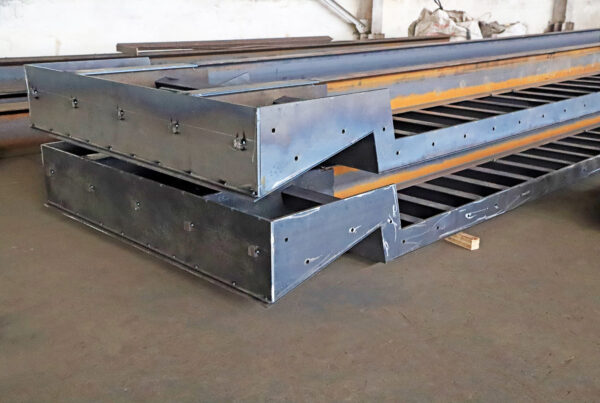
Welded racks support rigidity and integrated frames. Riveted builds support repeatable subassemblies and stable joints. Bolted builds support modularity, service access, and disassembly when programs require it. The assembly choice should follow the operational plan and the install environment.
A mixed strategy is common. Frames may be welded for stiffness while shelves and accessories use bolted interfaces for flexibility.
Which machining details keep rack interfaces consistent across phases?
Racks and cabinets benefit from machining where interface precision matters. Hole patterns, slots, and cutouts control rail installation, shelf alignment, latching hardware, and accessory mounting. Repeatable threading supports faster assembly and reduces the risk of cross-threading or field correction.
When these details stay consistent, rack systems behave like standardized products even when dimensions are custom.
Why do powder coating and painting matter for rack programs?
Racks experience handling and movement long before they carry equipment. Finishes reduce cosmetic damage and reduce touch-up work during staging. Powder coating is commonly chosen for durable coverage and long-term appearance stability. Painting remains useful for specification-driven requirements and customized finishes.
Finish selection also influences packaging strategy. A strong finish still needs protection. Separation, corner protection, and stable palletization preserve appearance through transit.
For rack manufacturing built around airflow features, stable interfaces, and phased deployment, call 704-629-4879, or request an expert consultation at Farrisgrp.com.
Frequently Asked Questions about Hickory, NC Data Center Rack Manufacturing
Can racks be built as open or closed configurations with custom dimensions?
Yes. Rack geometry can be matched to your layout and equipment footprint.
Can builds be welded, riveted, or bolted?
Yes. Assembly strategy can match rigidity and modularity goals.
Can racks be finished painted, powder coated, or unpainted?
Yes. Finish state can follow the requirement set.