
THE SHORT ANSWER
Yes, it matters, but not for the reason most people think. The status of being ISO 9001 certified does not certify a part. It certifies that a shop runs a documented quality management system and that an accredited outside auditor checks it on a set schedule. For a buyer, that means a certified fabricator has to review your print before accepting the order, control its processes, calibrate its gauges, trace its work, and fix the root cause when something goes wrong. An uncertified shop might do all of that. Nothing requires it to, and nobody independent is checking.
If you have ever opened a shipment and found a hole pattern a sixteenth off, you already know the real cost of a bad part is not the part. It is the line that waits. It is the sort and rework, the expedite charge, and the phone call where your supplier cannot tell you which batch of material the bad parts came from.
Most fab shops will tell you they do quality work, and plenty of them do. So the better question for a sourcing engineer or buyer is a simpler one: when something goes wrong, what will this supplier be able to show you? That is where ISO 9001 certification draws a clear line.
What is ISO 9001 certification for a fabrication shop?
ISO 9001 is the international standard for quality management systems, published by the International Organization for Standardization. A fabrication shop becomes certified when an accredited third party, called a certification body or registrar, audits its processes against the standard and confirms they conform.
Three points matter most for buyers:
-
- It covers the system, not a specific part. The standard requires a shop to define how it reviews prints, controls production, inspects work, and handles problems, and then to follow those methods every time.
- It is audited on a schedule. Certified companies typically go through a surveillance audit every year and a full recertification audit every three years.
- It was just updated. ISO published a revised edition, ISO 9001:2026, in September 2026. Companies certified to ISO 9001:2015 have a transition window that runs to September 2029, so a 2015 certificate is still fully valid today.
What does am ISO 9001 certified fab shop have to do that an uncertified shop does not?
Here is what the standard requires in practice, mapped to what it means for the parts that land on your dock.
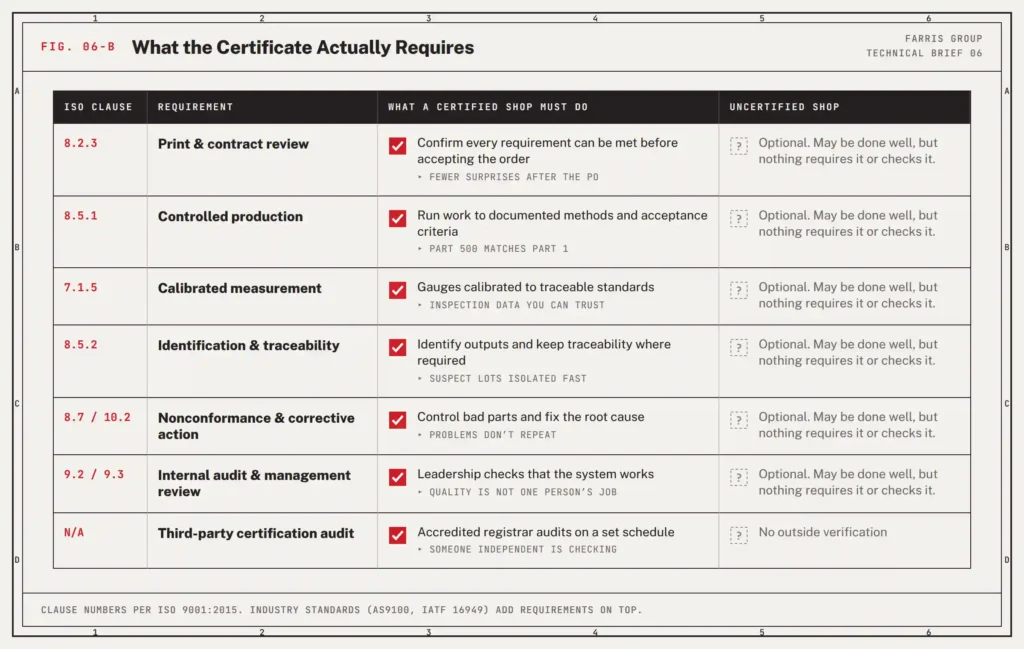
FIG. 06-B: What the certificate actually requires, by ISO 9001:2015 clause.
| Requirement | What a certified shop must do | What it means for you |
|---|---|---|
| Print and contract review | Confirm every requirement can be met before accepting the order | Fewer surprises after the PO |
| Controlled production | Run work to documented methods with defined acceptance criteria | Part 500 matches part 1 |
| Calibrated measurement | Calibrate gauges and instruments to traceable standards | Inspection data you can trust |
| Identification and traceability | Identify outputs and keep traceability where required | Suspect lots get isolated fast |
| Nonconformance and corrective action | Control bad parts and fix the root cause | The same problem does not repeat |
| Internal audit and management review | Leadership checks that the system works | Quality is not one person’s job |
| Third-party certification audit | An accredited registrar audits on a set schedule | Someone independent is checking |
An uncertified shop can do every one of these things well. Many small shops have excellent craftsmen. The difference is that nothing outside the shop requires it, and nobody independent verifies it. When you are sourcing a part you will reorder for years, that consistency is the thing you are actually buying.
How does a certified quality system work on an actual order?
Every order runs the same loop, and every step leaves a record. That record is what lets a supplier answer your questions quickly when a part is challenged.
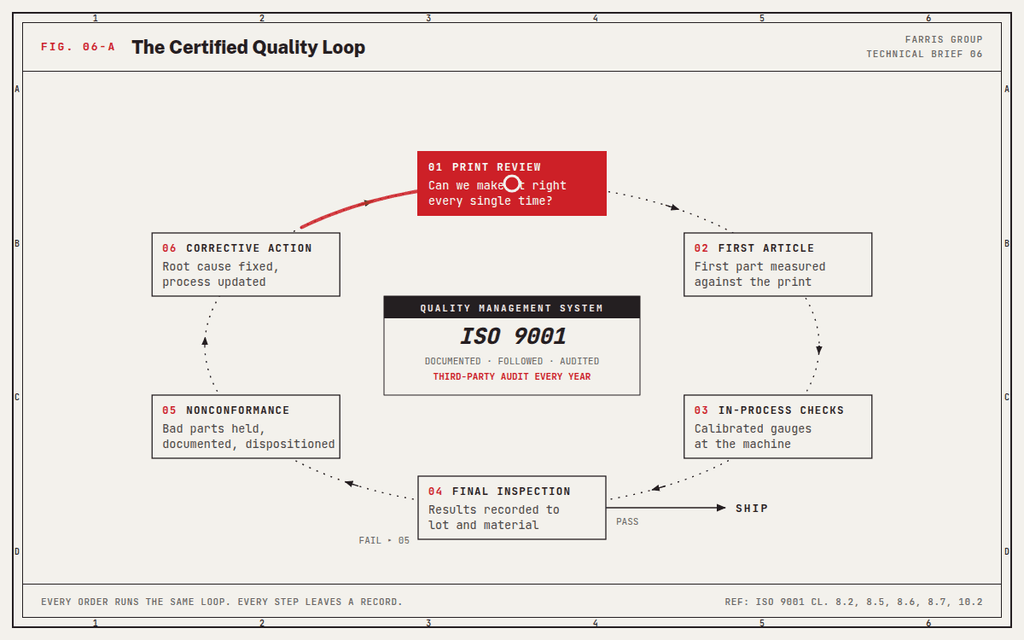
FIG. 06-A: The certified quality loop. Parts that pass final inspection ship. Parts that fail are held, documented, and drive a corrective action back into the process.
-
- Print review. Before quoting, the shop confirms it can hold every dimension, tolerance, material, and finish on the drawing.
- First article. The first part off a new setup is measured against the print before production continues.
- In-process checks. Operators verify critical features at the machine with calibrated gauges.
- Final inspection. Results are recorded and tied to the lot and the material it came from.
- Nonconformance. A part that fails is held, documented, and dispositioned. It does not quietly ship.
- Corrective action. The shop finds the root cause and updates the process so it does not happen again.
What ISO 9001 certification does not tell you
A certificate is a strong signal, but it has limits. Knowing them helps you ask better questions.
-
- It does not mean every part is perfect. It means problems get caught, documented, and corrected through a defined process.
- It does not replace industry-specific standards. Aerospace (AS9100) and automotive (IATF 16949) add requirements on top of ISO 9001. If your industry requires one, ask for it by name.
- It does not certify welders. Welding qualifications fall under separate programs such as AWS certification or CWB certification to CSA W47.1.
- Scope matters. Every certificate lists the sites and activities it covers. Confirm that the location making your part is on it.
How do you verify a supplier’s ISO 9001 certificate?
It takes about five minutes:
-
- Ask the supplier for a copy of its current certificate.
- Note the certification body named on it and check that it is accredited. In the US, many are accredited by ANAB, which belongs to the International Accreditation Forum (IAF).
- Search the company on Global ACI, a global database of accredited certifications.
- Confirm the scope and site address match the facility that will make your parts.
- Check the expiration date. With ISO 9001:2026 now published, ask about the supplier’s transition plan.
What should you ask a fab shop beyond the certificate?
A certificate gets a supplier on your shortlist. These questions tell you how the system actually works on the shop floor:
-
- Walk me through what happens when a part fails inspection. Who decides what happens to it?
- How do you handle first article inspection on a new part number, and will I get the report?
- If I call about a bad part six months from now, how fast can you tell me which material and which run it came from?
- When was your last surveillance audit, and what did the auditor find?
- Can I tour the plant?
That last question matters most. Organized work in process, posted work instructions, and a clean floor tell you more in an hour than any document can.
How Farris applies ISO 9001 on the shop floor
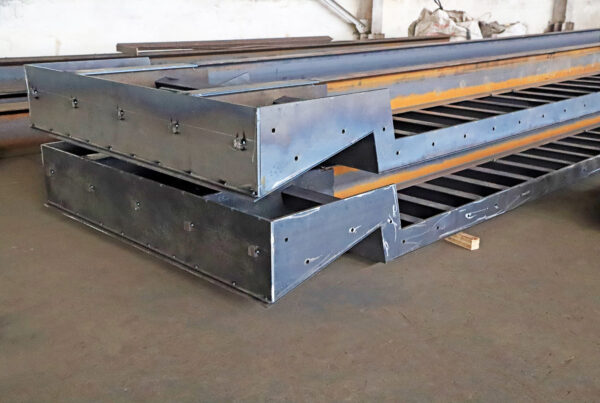
Farris Group has built metal parts for OEMs for more than 40 years. Our quality management system is certified to ISO 9001:2015, and our welding operation holds CWB certification to CSA W47.1. Here is what that looks like day to day:
-
- We review the print before we quote. If we do not believe we can make a part right every time, we will not quote it. We would rather tell you no up front than ship you a problem.
- We build the process for repeat runs. Most of our work is parts customers reorder for years, so we plan the cutting, forming, and welding sequence to hold the print on every run, not just the first article.
- One quality system covers every step. Cutting, forming, machining, welding, powder coating, and kitting all run under the same system, so you are not managing handoffs between five vendors.
- Our door is open. Buyers and engineers who tour our facilities see the system working. We think that is the best audit there is.
If you are qualifying a supplier for a part you will order for years, consider what it would be worth to stop sorting incoming parts and stop chasing root causes. That is the conversation we like to have.
Frequently asked questions
Certified companies typically have a surveillance audit each year and a full recertification audit every three years, conducted by an accredited certification body.
Organizations certified to ISO 9001:2015 are expected to complete their transition by the applicable September 2029 deadline established under the accredited-certification transition arrangements.