
Newton, NC Data Center Metal Fabrication for Clean Routing, Safe Access, and Staged Installs | Farris Group
Why do data center layouts put special demands on fabricated steel?
Data center environments compress power, cooling, and connectivity infrastructure into spaces that still need to remain serviceable. That compression creates a practical requirement for fabricated steel. Assemblies must fit coordinated layouts, preserve clearance zones, and support access paths that maintenance teams will use for years.
A fabrication program succeeds when the steel works like infrastructure, not like an obstacle. A support bracket that crowds a routing path causes field reroutes. A platform that blocks a service panel creates operational friction. A guard system that installs out of sequence slows the job. The fabricator’s plan needs to respect the construction plan and the long-term service plan.
Farris Group’s data center fabrication includes steel assemblies supporting power, cooling, and connectivity routing as part of the data center construction scope.
Which fabricated assemblies show up most often in data center construction?
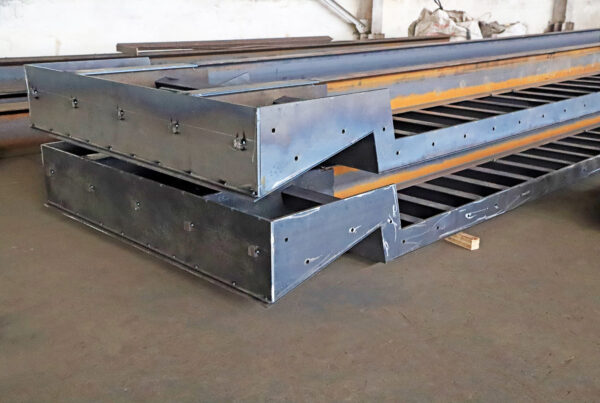
Fabricated steel often supports the work that happens around critical equipment zones. Common assemblies include equipment platforms, access structures, support frames, mounting brackets, and guarding that keeps movement safe around installed infrastructure.
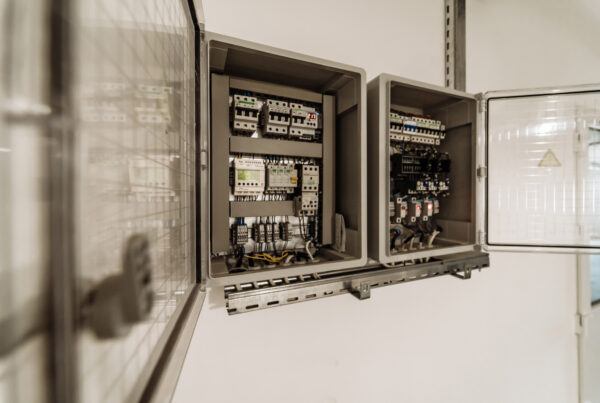
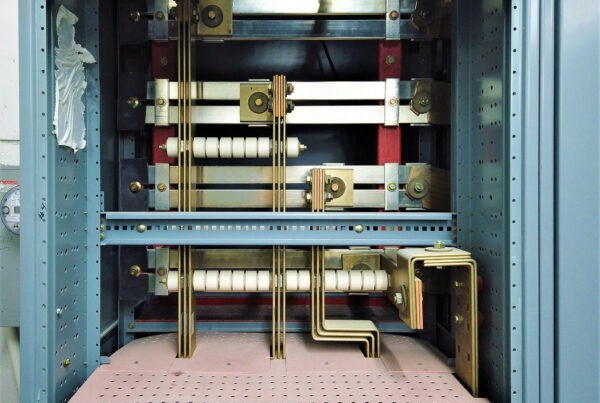
Support assemblies frequently relate to power distribution zones and cooling infrastructure, where equipment footprints and access clearances need to remain stable. Connectivity routing benefits from brackets and supports that preserve cable pathway geometry. The goal is clean routing that remains organized and serviceable.
The most valuable assemblies install cleanly, hold alignment, and arrive staged in a way that fits the site sequence. In data center work, staged shipments are a practical advantage because receiving and staging areas can become crowded quickly.
How do kitting and staged deliveries reduce site congestion?
Staged delivery planning turns fabrication into a scheduling tool. When shipments arrive by hall, zone, or subsystem, install teams can move directly to the next work area rather than sorting mixed bundles on the dock. Kitted loads also reduce the chance of parts being misplaced when multiple trades are working in parallel.
Newton’s manufacturing corridor supports projects that benefit from this approach because deliveries can be structured around the build plan and installation sequence. Labels that reference zones and assemblies help crews stage quickly. Packaging that protects critical edges and mating faces supports clean installs.
How do ISO workflow and documented inspection support repeatability?
Data center projects often share repeated part families across phases. Repeatability helps when expansions occur, or when a build follows the same design pattern across multiple equipment zones. ISO 9001:2015 frameworks support defined routing and inspection checkpoints that keep outputs consistent.
Farris Group’s Newton fabrication services include an ISO 9001:2015 workflow, robotic welding, kitting, and documented inspection, along with FedLinks verified positioning. That combination supports programs that want repeatability, traceability, and staging logic.
How does FedLinks verified vendor positioning support documentation-heavy programs?
Procurement teams sometimes require vendor alignment and documentation readiness. Farris Group is a FedLinks Verified Federal Vendor for projects where structured records support delivery success.
Documentation packages can be aligned to the job so the receiving team has a clear record of what arrived, how it is labeled, and how it should be staged. That reduces follow-up work and supports smoother closeout.
For a staged fabrication plan aligned to your data center sequence in Newton, NC, call 704-629-4879 or visit Farrisgrp.com to share drawings.
Delivery & Service Areas: United States; United Kingdom; Turkey.
Frequently Asked Questions about Newton, NC Data Center Fabrication
Can documentation support procurement and closeout needs?
Yes. Routing and inspection records can be aligned to the shipment.
Can shipments be divided by hall, zone, or installation phase?
Yes. Staged deliveries can align to the site plan.
Can fabrication support repeatable assemblies across phased expansions?
Yes. Repeatable part families support consistent build patterns.