
THE SHORT ANSWER
Look closely at a tractor, a wheel loader, or a forklift and most of the metal you see carries no one’s name: brackets, guards, steps, panels, enclosures, and subframes. Many of these parts are built by contract fabricators working from the OEM’s prints and delivered to the OEM’s assembly schedule. The best fabrication partners are judged on one thing: whether part number 10,000 fits exactly like part number one
If you source components for an equipment line, you know the badge on the hood is the easy part. The harder part is the hundreds of fabricated pieces behind it, each with its own print, revision level, finish spec, and delivery date tied to your build sequence. When one of them is late or off, the line does not care how good the rest of the machine is.
So how do you know whether a fabricator can carry that kind of part for years, not just for the first order?
What are the hidden parts on heavy equipment?
Most fabricated content on agricultural, construction, and material handling equipment falls into six part families:
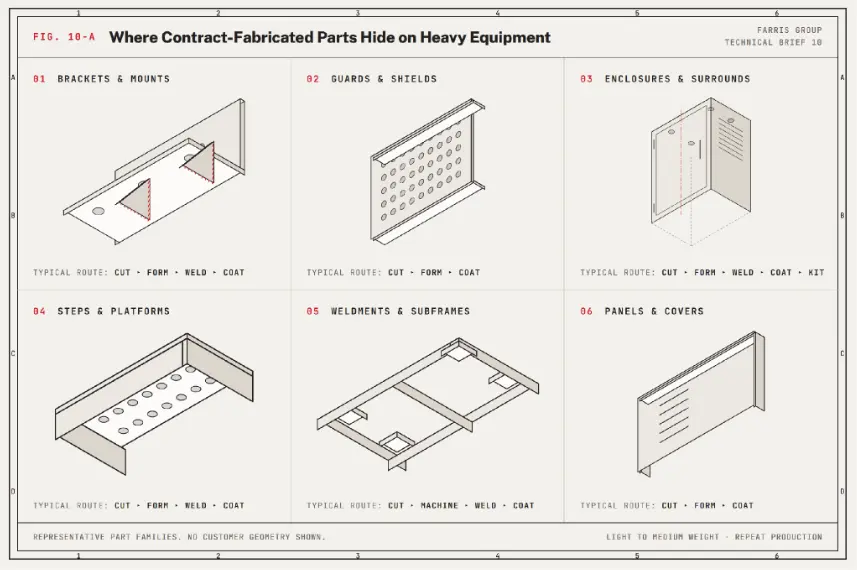
FIG. 10-A: Where contract-fabricated parts hide on heavy equipment. Representative shapes only, no customer geometry.
-
- Brackets and mounts hold hydraulics, wiring, lights, and controls in place. Hole patterns have to line up with parts from other suppliers.
- Guards and shields protect operators and components from moving parts, heat, and debris.
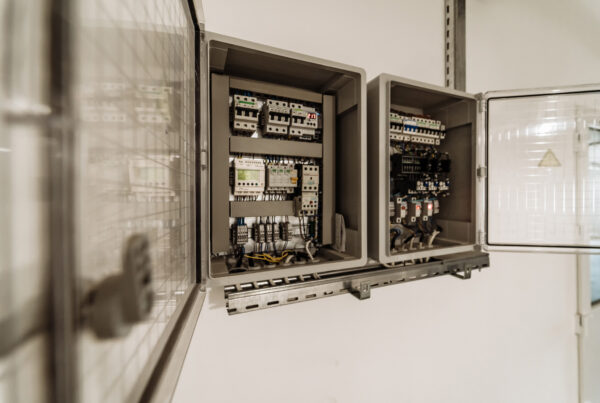
- Enclosures and surrounds house generators, engines, electrical gear, and controls. They need flat panels, tight seams, and a durable finish.
- Steps, platforms, and handrails give operators safe access and must meet the OEM’s strength and safety specs.
- Weldments and subframes carry load. Weld sequence and fixturing control distortion.
- Panels and covers are large formed parts where flatness and finish are visible to the end customer.
Why do equipment OEMs outsource fabrication?
-
- Floor space and capital. OEM plants put their space and investment into final assembly. Laser cutting, press brakes, welding cells, and paint lines are expensive to own and staff.
- Cyclical demand. Agricultural and construction equipment demand moves with seasons and markets. A contract partner absorbs swings that would otherwise idle in-house equipment.
- Specialized processes. Robotic welding and powder coating run best at high utilization across many part numbers.
- Regional supply. Heavy, bulky parts are expensive to ship. Many OEMs prefer suppliers within practical freight distance of the assembly plant.
What do heavy equipment parts demand from a fabricator?
These parts are rarely exotic. What makes them hard is that they have to be right every time, for years.
-
- Repeatability. The same part, with the same fit, across years of reorders.
- Revision control. When Rev C is released, Rev B has to stop everywhere: programs, fixtures, work instructions, and inventory.
- Finish durability. These parts live outdoors in mud, fertilizer, road salt, and sun. Pretreatment and coating thickness matter as much as color.
- Weld consistency. Load-bearing welds need the same bead and penetration on every part, which is where robotic welding earns its place.
- Delivery to the build schedule. Parts arrive kitted and sequenced so they go straight to the line.
How does a heavy equipment part move through a contract fabricator?
A typical bracket or guard follows the route below. The fewer times it changes hands, the fewer chances there are for something to go wrong.
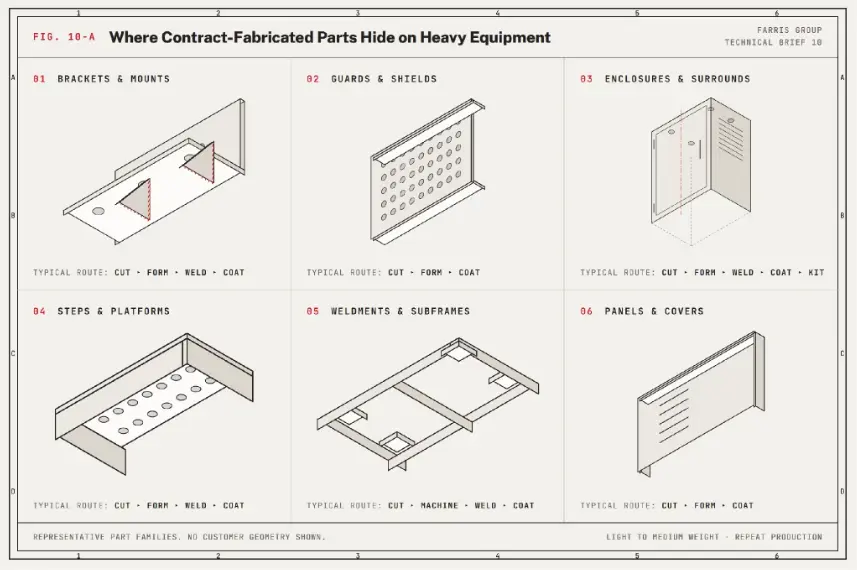
FIG. 10-B: From flat blank to finished part. One quality system from first cut to shipment.
-
- Cut. Laser or CNC plasma cutting profiles the flat blank, including holes and slots.
- Form. Press brakes, rolls, and tube benders shape the part. Bend sequence decides where features land.
- Machine. CNC turning and milling add precision features where a cut edge is not enough.
- Weld. Manual and robotic welding join gussets, tabs, and subassemblies.
- Coat. Powder coat or wet paint protects the part for its life outdoors.
- Kit and ship. Parts are counted, labeled to the current revision, kitted, and shipped to the build schedule.
When all six steps happen inside one company and one quality system, you have one point of accountability instead of a chain of vendors pointing at each other.
How should you choose a contract fabrication partner for equipment parts?
Before you send out the next RFQ, it is worth asking a few questions that separate a good fit from a risky one:
-
- Does the shop’s sweet spot match your parts? A shop built for light to medium weight parts and one built for massive structures are very different businesses.
- Can they show repeat production, not just prototypes and one-off jobs?
- Is the quality system certified to ISO 9001, and are their welders certified?
- Do they finish in house, or does your part leave for paint and come back?
- Will they plan capacity around your forecast, or do they take whatever walks in the door?
- Are they close enough to keep freight reasonable and make a plant visit easy?
- Will they protect your supply chain? Your supplier list is competitive information.
How does Farris handle customer confidentiality?
Since 1979, Farris has built parts for some of the largest agricultural, construction, and material handling OEMs in the country. Many OEMs treat their supplier base as competitive information, so we follow each customer’s rules on whether and how its name is used. If you become a customer, how your name is used stays your call.
How Farris works with equipment OEMs
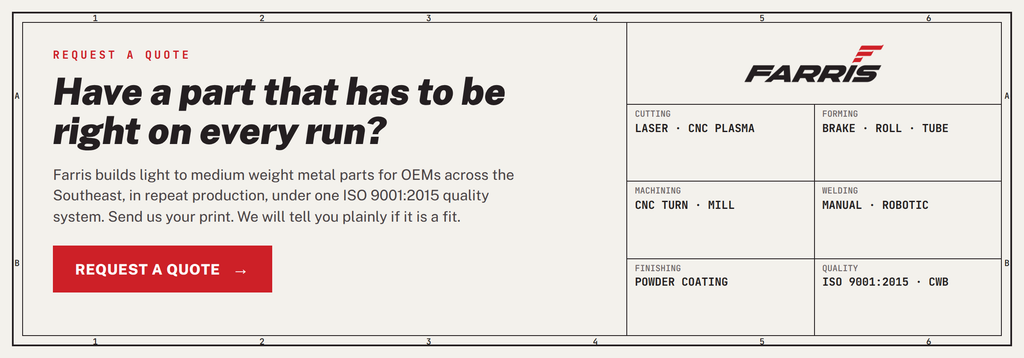
Founded in 1979, Farris Group is a contract manufacturer in the Charlotte region of North Carolina, with more than 200,000 square feet of manufacturing space across four facilities. We focus on light to medium weight metal parts in repeat production for OEMs across the Southeast.
-
- Everything in house: cutting, forming, CNC machining, manual and robotic welding, precision powder coating, and kitting and assembly.
- Certified systems: an ISO 9001:2015 quality management system registered by Perry Johnson Registrars, an ANAB-accredited certification body, plus CWB certification to CSA W47.1 for welding.
- One point of contact for specialty work: when a part needs a process we do not run in house, such as waterjet cutting, we source it through qualified partners and manage it under our quality system. You still deal with one supplier and one set of records.
- Built for the long run: we are selective about the work we take on. We look for parts we can make right every time, on a forecast, for years. When something is not a fit, we will tell you plainly.
- Come see it: the best way to judge a fabricator is to walk the floor. We welcome plant tours.
If you have a part family that needs a dependable, long-term home, send us the print. We will tell you quickly whether it belongs in our shop.
Frequently asked questions
Many do. Farris Group offers powder coating, wet paint, kitting, and assembly in house, so parts arrive finished and ready for the line instead of moving between separate vendors.
Farris focuses on repeat production with a forecast, from small lots to long-running programs. One-time jobs with no repeat demand are usually not a fit. If you are unsure, send the print and we will tell you quickly.