
Contract Metal Fabrication for Salisbury, NC | Farris Group
How do we turn a drawing into a dependable shop process?
A print shows us where the finished part needs to end. Our first job is to map the path that gets it there.
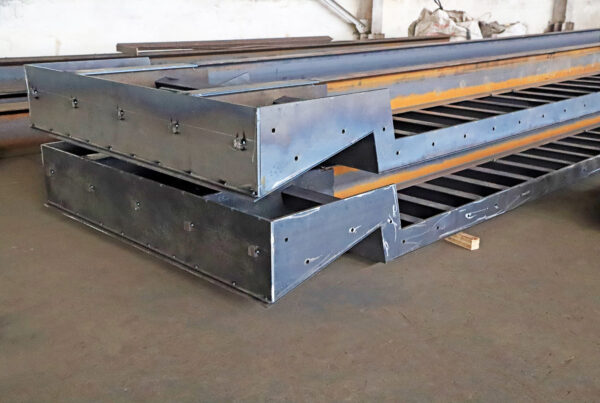
We provide contract metal fabrication for Salisbury, NC from our North Carolina manufacturing base. We approach each project by looking closely at geometry, downstream fit, and the steps required to hold the print across repeat work.
The order of those steps matters.
A cut feature may become a mounting point after forming; a bend can move nearby geometry. Welded areas can pull if heat is poorly managed. We plan around those effects before the part reaches later build stages.
Our metal fabrication capabilities support small-lot work and longer production programs. When a project calls for related services, we can also draw from cutting and forming resources within the wider Farris Group manufacturing network.
Repeatable fabrication comes from repeatable shop methods; the drawing sets the target, and the process keeps us on it.
Why do we pay close attention to bend sequence?
A formed part changes shape one bend at a time.
The first bend may affect how the next area reaches the brake. Later bends can change where holes or edges land in the final part. That makes sequence a key part of the work.
Our metal forming capabilities help us build around these relationships. We use the drawing as the guide; we plan each bend so the part can move through the shop without losing the geometry needed for final fit.
Repeat orders raise the stakes.
A workable first piece is useful. A stable process gives us a better path for producing the same result throughout the run.
How does cutting set the stage for later fabrication?
Every fabricated part begins with defined edges and features.
Accurate cutting gives later shop work a sound starting point. Hole placement matters; outside profiles matter. If either begins out of place, forming or welding may carry that error forward.
We treat the early steps as part of the finished result.
That approach helps with brackets and housings, as well as larger fabricated structures. It also helps downstream teams receive parts that are ready to move into their next build stage.
For broader shop safety guidance, OSHA provides detailed machine guarding information for industrial equipment and points of operation.
What supports our work for regulated supply chains?
Supplier review often extends beyond the part itself.
Our Farris Group manufacturing system operates with ISO 9001:2015 certification, giving our work a recognized quality management framework.
Farris Group is also FedLinks Verified, providing federal buyers and prime contractors with a direct source for reviewing our supplier profile.
Those credentials sit alongside the day-to-day work on the shop floor. We still judge each fabricated part by its print and the requirements tied to the job.
For Salisbury-area manufacturers, we offer a regional source for contract work with access to a broad metal manufacturing network.
To learn more about metal fabrication for Salisbury, NC, call 704-629-4879 or visit the Farris Group website to request an expert consultation.
Frequently Asked Questions about Metal Fabrication Services in Salisbury, NC
Why can welding change fabricated part geometry?
Heat can cause material to move as a weld cools. A planned weld sequence and suitable holding methods can help control that movement.
How does a forming sequence affect repeat production?
A defined sequence gives operators a consistent path through the work. It also helps protect access to later bend areas.
Can Farris Group support both short runs and ongoing fabrication programs?
Yes. We support small-lot work and repeat contract production based on print requirements, scope, and shop capacity.