
Shelby, NC CNC Machining That Keeps Metal Assemblies Moving on the Floor | Farris Group
What does Shelby machining need to deliver for modern manufacturing work?
We see Shelby-area manufacturers build assemblies where alignment is the difference between smooth production and constant correction. A bracket that lands slightly off creates an hour of frustration. A bore that shifts causes a press-fit issue. A face that is out of flat changes how a gasket seats. Machining is valuable when it keeps those problems away from the floor.
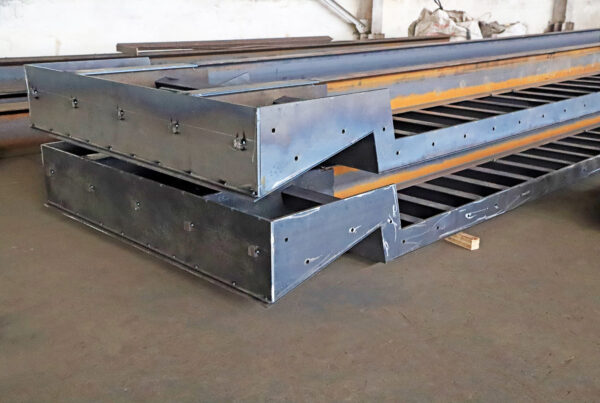
CNC machining by Farris Group programs often include plates, brackets, spacers, bushings, shafts, and compact housings. These components frequently live inside fabricated assemblies, equipment supports, transport systems, and industrial infrastructure. When the geometry holds, assembly becomes predictable. When the geometry drifts, everything slows.
Farris Group is an ISO-certified contract manufacturer supporting machining alongside fabrication and finishing. That full set of services matters for programs that want machining, finishing, and staging to move together.
How do milling strategies protect hole pattern accuracy and interface geometry?
Milling establishes the features that decide fit. Hole patterns, pockets, and mating faces need stable datum referencing. Workholding discipline keeps parts from shifting, which supports repeatable geometry across a batch. Tool path strategies support consistent surface quality on functional faces, especially when parts mate, align, or carry loads.
Edge treatment supports assembly and safety. Controlled deburring reduces sharp edges and supports fastener seating. Chamfers and countersinks follow drawing requirements so hardware interfaces remain reliable.
How do turning, boring, and threading support repeatable fit over time?
Turning supports diameter control, concentric relationships, and runout stability. Bushings and shafts rely on controlled diameters and consistent measurement checkpoints. Boring and reaming refine critical bores that receive bearings, sleeves, or locating features. Thread control supports repeated fastener engagement, which matters for assemblies that see maintenance cycles.
Inspection checkpoints focus on the features that control fit: hole location, bore size, key face relationships, and thickness where it drives interface geometry. Reporting can be structured so approval moves quickly when quality teams want a clear view of the critical features.
How do packaging and kitting reduce receiving and staging time?
A clean machining job still fails if parts arrive mixed and hard to stage. Packaging supports the workflow when parts are separated by part number, protected at critical faces and threads, and labeled in a way that matches the work order structure. Kitted loads help when a shipment needs to map to a station, subassembly, or installation phase.
This approach supports stability in production. Receiving spends less time sorting. The line spends less time waiting. The job stays on schedule.
How do ISO 9001:2015 and FedLinks support procurement requirements in Shelby?
Farris Group provides ISO 9001:2015 quality management standards for repeatable results. It is also a FedLinks Verified Federal Vendor for government-aligned and regulated procurement needs. That matters for programs that require documentation readiness and vendor alignment.
If a Shelby, NC machining schedule review would help, call 704-629-4879 or submit details through Farrisgrp.com.
Frequently Asked Questions about Machining Services in Shelby, NC
Can repeat releases stay consistent after first-article approval?
Yes. Stable programs and checkpoints support repeatability.
Can machining be coordinated with finishing and assembly support?
Yes. Integrated routing supports programs that want fewer handoffs.
Can machined parts ship kitted by station or subassembly?
Yes. Kitting can follow your build plan.